
BLOGS
Why Does Fever Keep Coming Back During Monsoon? Common Causes to Know
Category : General
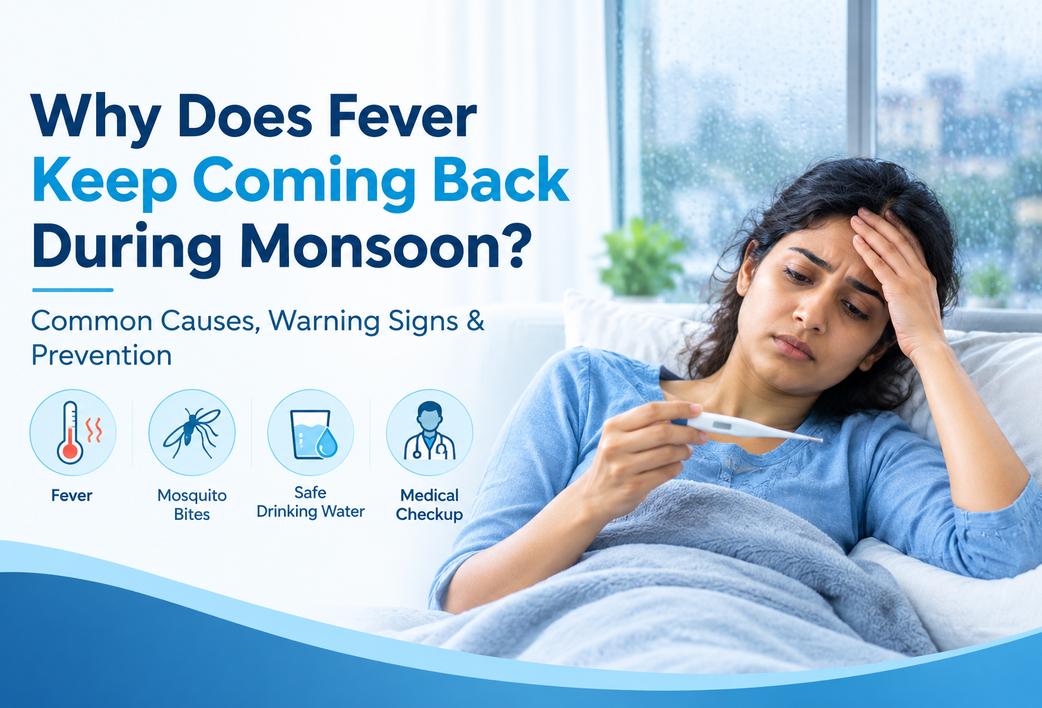
The rains bring relief from the summer heat, but they also bring recurrent fever for many households during monsoon. If your fever keeps coming back during monsoon despite finishing a course of medicines, you’re not imagining it. Waterlogging, humidity, and unsafe drinking water create ideal conditions for infections to relapse or reinfect the body within days. At Ashwin Hospital, our physicians see a sharp rise in patients reporting repeated fever between July and September every year. This guide breaks down why fever returns, what it could mean, and when it’s time to get checked.
Why Does Fever Return Again and Again in the Rainy Season?
Monsoon humidity slows the body’s natural healing process and keeps bacteria and viruses around longer than they normally would. A course of paracetamol or antibiotics may give some temporary relief but the fever shoots up again once the medicine wears off. This is a classic pattern for monsoon illness and generally suggests an underlying infection rather than a random symptom.
- Impaired immunity after the first infection
- Reinfection from contaminated water or mosquito bites
- Early or inadequate courses of antibiotics
- Co-infections of viruses and bacteria in the same season
Common Causes of Recurring Fever You Should Know This Monsoon
Viral fever during monsoon is the most frequent cause, and it usually settles in three to five days before symptoms unexpectedly return. Dengue fever symptoms such as high fever, severe body ache, and a drop in platelet count can relapse if the second phase of the illness goes unnoticed. Typhoid fever symptoms, including a step-ladder rise in temperature, are notorious for returning if the antibiotic course is stopped early.
- Viral fever: sudden onset, cold, body ache, usually short-lived
- Dengue: high fever, rash, joint pain, needs platelet monitoring
- Typhoid: gradual fever rise, abdominal pain, loose stools, relapses without a full antibiotic course
- Urinary or respiratory infections that can mimic recurring fever
TheNational Center for Vector Borne Diseases Control tracks dengue trends across India and lists the warning signs to watch for during outbreak months.
Dengue vs Typhoid vs Viral Fever: Quick Comparison
Fever Type
Common Onset
Key Symptoms
Typical Duration
Needs Testing
Viral fever
Sudden
Cold, body ache, mild fever
3 to 5 days
Usually not, unless prolonged
Dengue
Sudden, high
High fever, rash, joint pain, low platelets
5 to 7 days
Yes, NS1 and platelet count
Typhoid
Gradual, step-ladder
Abdominal pain, rising fever, weakness, loose stools
10 to 14 days with treatment
Yes, Widal or blood culture
When Should Repeated Fever Worry You?
Not every case of repeated fever in adults needs a hospital visit, but you should never ignore certain signs. Fever above 103°F for more than two days, bleeding gums, or severe abdominal pain point toward complications from seasonal infections like dengue or typhoid. Children, elderly patients, and people with existing health conditions carry a higher risk of complications and need faster evaluation.
- Fever lasting more than five days without improvement
- Rash, bleeding, or unusual bruising
- Persistent vomiting or inability to keep fluids down
- Confusion, breathlessness, or severe weakness
How Ashwin Hospital Diagnoses and Treats Recurring Fever
At Ashwin Hospital we don’t guess what constitutes a recurrent fever. We investigate each case with targeted blood work based on symptoms pointing to a particular system of the body. Our internal medicine team uses dengue NS1 and platelet monitoring together with typhoid testing (Widal or blood culture) to quickly identify the exact cause. This systematic way of doing things stops the relapse that can come from a wrong or incomplete diagnosis.
- Same day fever panel and platelet testing
- Targeted surveillance of dengue warning signs
- Full course antibiotic guidance for typhoid to prevent relapse
- Follow-up consultation – full recovery check
Simple Ways to Prevent Monsoon Fever From Coming Back
Preventing monsoon fever causes starts well before the first symptom shows up. Clean drinking water, mosquito control at home, and completing every prescribed medicine course are the three habits doctors repeat most often. Skipping even the last two days of an antibiotic course is one of the most common reasons fever returns within a week.
- Drink boiled or filtered water, especially outside the home
- Clear stagnant water around the house every week
- Finish the entire course of prescribed antibiotics
- Get tested early instead of self-medicating for repeated fever
According to theCDC, most typhoid relapses happen when treatment is stopped before the bacteria are fully cleared from the body.
Don’t Ignore a Fever That Won’t Stay Away
Recurrent fever during monsoon is rarely just bad luck. It’s usually the body signaling an infection that wasn’t fully treated, or a new one layered on top of the first. Don’t wait for the fever to spike a third time before acting. Book a consultation with Ashwin Hospital today and get a proper diagnosis instead of another round of guesswork medicines.
FAQs
- Why does my fever relapse in monsoon even after taking medicine?
This in turn usually means the underlying infection – a viral relapse, dengue or typhoid – was never fully cleared. The most common reasons for recurrence are early discontinuation of medication or incorrect diagnosis.
- What is the difference between dengue fever symptoms and typhoid fever symptoms?
Dengue fever causes sudden high fever, rash, joint pain and drop in platelets. Typhoid fever causes gradual step-ladder fever, abdominal pain, weakness and loose stools. Both need blood tests to confirm as early symptoms can overlap.
- How long does viral fever during monsoon usually last?
Most viral fevers clear up in three to five days with bed rest and fluids. If the fever lasts more than five days or recurs after appearing to have subsided, it is recommended to get tested for dengue or typhoid.
- Is recurring fever in adults always a sign of dengue or typhoid?
No, it can also be caused by a urinary or respiratory infection, or a viral relapse. A fever panel is the only reliable way to identify the exact cause.
- When should I see a doctor for repeated fever in adults?
Call a doctor if the fever lasts more than five days, is higher than 103 degrees, or is accompanied by a rash, bleeding, severe aches, or persistent vomiting. Early testing stops problems from both dengue and typhoid.
The rains bring relief from the summer heat, but they also bring recurrent fever for many households during monsoon. If your fever keeps coming back during monsoon despite finishing a course of medicines, you’re not imagining it. Waterlogging, humidity, and unsafe drinking water create ideal conditions for infections to relapse or reinfect the body within days. At Ashwin Hospital, our physicians see a sharp rise in patients reporting repeated fever between July and September every year. This guide breaks down why fever returns, what it could mean, and when it’s time to get checked.
Why Does Fever Return Again and Again in the Rainy Season?
Monsoon humidity slows the body’s natural healing process and keeps bacteria and viruses around longer than they normally would. A course of paracetamol or antibiotics may give some temporary relief but the fever shoots up again once the medicine wears off. This is a classic pattern for monsoon illness and generally suggests an underlying infection rather than a random symptom.
- Impaired immunity after the first infection
- Reinfection from contaminated water or mosquito bites
- Early or inadequate courses of antibiotics
- Co-infections of viruses and bacteria in the same season
Common Causes of Recurring Fever You Should Know This Monsoon
Viral fever during monsoon is the most frequent cause, and it usually settles in three to five days before symptoms unexpectedly return. Dengue fever symptoms such as high fever, severe body ache, and a drop in platelet count can relapse if the second phase of the illness goes unnoticed. Typhoid fever symptoms, including a step-ladder rise in temperature, are notorious for returning if the antibiotic course is stopped early.
- Viral fever: sudden onset, cold, body ache, usually short-lived
- Dengue: high fever, rash, joint pain, needs platelet monitoring
- Typhoid: gradual fever rise, abdominal pain, loose stools, relapses without a full antibiotic course
- Urinary or respiratory infections that can mimic recurring fever
TheNational Center for Vector Borne Diseases Control tracks dengue trends across India and lists the warning signs to watch for during outbreak months.
Dengue vs Typhoid vs Viral Fever: Quick Comparison
| Fever Type | Common Onset | Key Symptoms | Typical Duration | Needs Testing |
| Viral fever | Sudden | Cold, body ache, mild fever | 3 to 5 days | Usually not, unless prolonged |
| Dengue | Sudden, high | High fever, rash, joint pain, low platelets | 5 to 7 days | Yes, NS1 and platelet count |
| Typhoid | Gradual, step-ladder | Abdominal pain, rising fever, weakness, loose stools | 10 to 14 days with treatment | Yes, Widal or blood culture |
When Should Repeated Fever Worry You?
Not every case of repeated fever in adults needs a hospital visit, but you should never ignore certain signs. Fever above 103°F for more than two days, bleeding gums, or severe abdominal pain point toward complications from seasonal infections like dengue or typhoid. Children, elderly patients, and people with existing health conditions carry a higher risk of complications and need faster evaluation.
- Fever lasting more than five days without improvement
- Rash, bleeding, or unusual bruising
- Persistent vomiting or inability to keep fluids down
- Confusion, breathlessness, or severe weakness
How Ashwin Hospital Diagnoses and Treats Recurring Fever
At Ashwin Hospital we don’t guess what constitutes a recurrent fever. We investigate each case with targeted blood work based on symptoms pointing to a particular system of the body. Our internal medicine team uses dengue NS1 and platelet monitoring together with typhoid testing (Widal or blood culture) to quickly identify the exact cause. This systematic way of doing things stops the relapse that can come from a wrong or incomplete diagnosis.
- Same day fever panel and platelet testing
- Targeted surveillance of dengue warning signs
- Full course antibiotic guidance for typhoid to prevent relapse
- Follow-up consultation – full recovery check
Simple Ways to Prevent Monsoon Fever From Coming Back
Preventing monsoon fever causes starts well before the first symptom shows up. Clean drinking water, mosquito control at home, and completing every prescribed medicine course are the three habits doctors repeat most often. Skipping even the last two days of an antibiotic course is one of the most common reasons fever returns within a week.
- Drink boiled or filtered water, especially outside the home
- Clear stagnant water around the house every week
- Finish the entire course of prescribed antibiotics
- Get tested early instead of self-medicating for repeated fever
According to theCDC, most typhoid relapses happen when treatment is stopped before the bacteria are fully cleared from the body.
Don’t Ignore a Fever That Won’t Stay Away
Recurrent fever during monsoon is rarely just bad luck. It’s usually the body signaling an infection that wasn’t fully treated, or a new one layered on top of the first. Don’t wait for the fever to spike a third time before acting. Book a consultation with Ashwin Hospital today and get a proper diagnosis instead of another round of guesswork medicines.
FAQs
- Why does my fever relapse in monsoon even after taking medicine?
This in turn usually means the underlying infection – a viral relapse, dengue or typhoid – was never fully cleared. The most common reasons for recurrence are early discontinuation of medication or incorrect diagnosis. - What is the difference between dengue fever symptoms and typhoid fever symptoms?
Dengue fever causes sudden high fever, rash, joint pain and drop in platelets. Typhoid fever causes gradual step-ladder fever, abdominal pain, weakness and loose stools. Both need blood tests to confirm as early symptoms can overlap. - How long does viral fever during monsoon usually last?
Most viral fevers clear up in three to five days with bed rest and fluids. If the fever lasts more than five days or recurs after appearing to have subsided, it is recommended to get tested for dengue or typhoid. - Is recurring fever in adults always a sign of dengue or typhoid?
No, it can also be caused by a urinary or respiratory infection, or a viral relapse. A fever panel is the only reliable way to identify the exact cause. - When should I see a doctor for repeated fever in adults?
Call a doctor if the fever lasts more than five days, is higher than 103 degrees, or is accompanied by a rash, bleeding, severe aches, or persistent vomiting. Early testing stops problems from both dengue and typhoid.