BLOGS
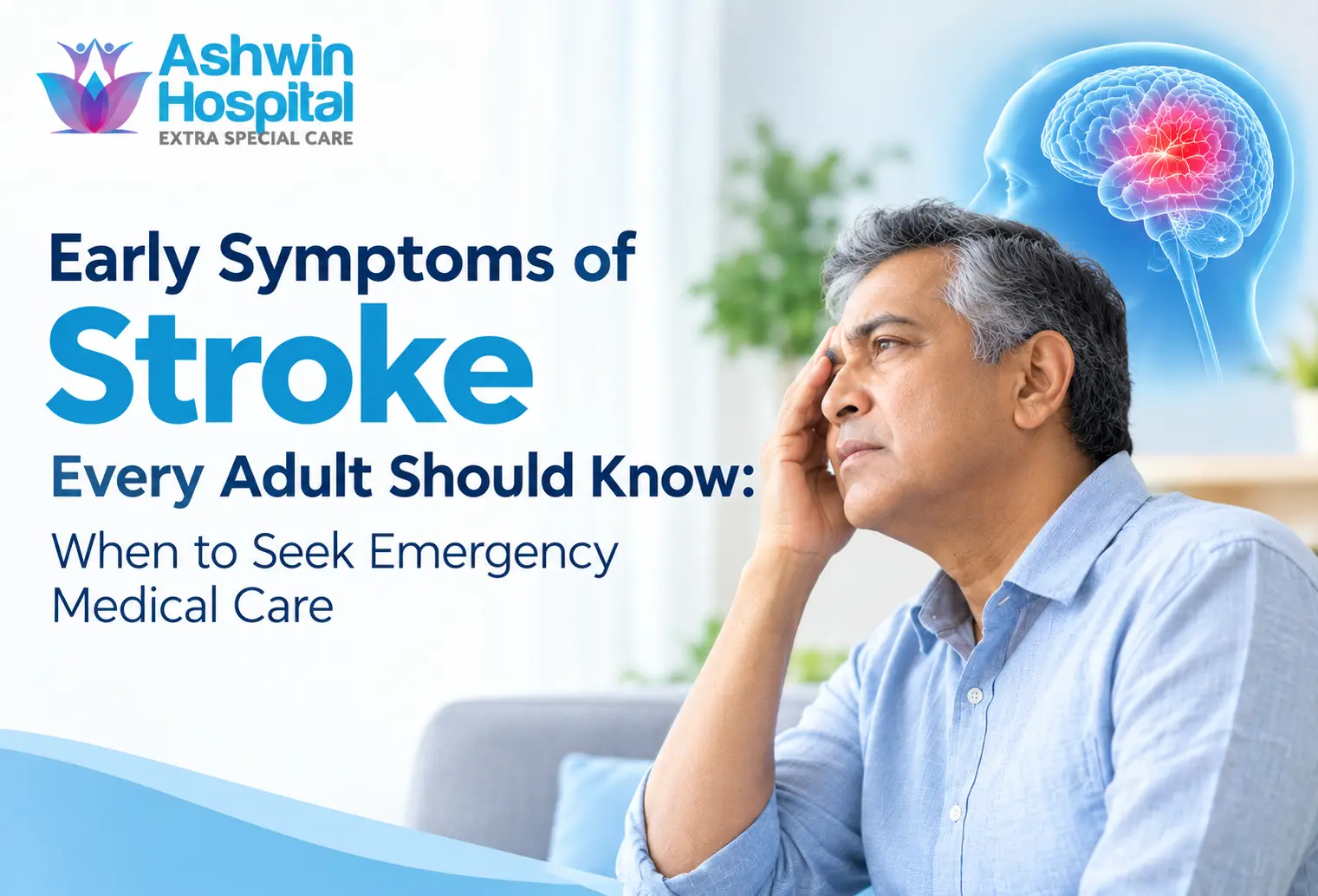
Early Symptoms of Stroke Every Adult Should Know: When to Seek Emergency Medical Care
Category : Neurology
A stroke can change a person’s life within minutes, yet many people miss the Early Symptoms of Stroke simply because they do not know what to look for. Recognising Stroke Symptoms early and acting quickly can help reduce delays in receiving appropriate medical care. If sudden symptoms suggest a possible stroke, Ashwin Hospital provides immediate medical evaluation to help identify the cause and guide appropriate treatment.
This blog explains the Stroke Warning Signs every adult should know, how to use the FAST test, what to do if symptoms disappear, and why Emergency Stroke Treatment should never be delayed.
What are the early symptoms of a stroke?
The Early Symptoms of Stroke usually appear suddenly and can include facial drooping, weakness or numbness on one side of the body, slurred speech, confusion, vision changes, dizziness, loss of balance or a sudden severe headache. Check for facial drooping, arm weakness, and difficulty speaking using the FAST test for stroke. If any warning signs show up, get emergency medical attention right away.
What Happens During a Stroke?
A stroke happens when a blood vessel in the brain bursts or when blood flow to a portion of the brain is cut off. There are two primary types of stroke: hemorrhagic stroke, which happens when a blood vessel bursts, and ischemic stroke, which happens when a blood vessel is blocked. Since brain tissue can become damaged rapidly when its blood supply is interrupted, recognising Stroke Warning Signs and seeking medical attention quickly is essential.
- Ischemic stroke: Blood cannot reach a portion of the brain due to a blood clot or other obstruction.
- Haemorrhagic stroke: A blood vessel ruptures and causes bleeding in or around the brain.
- Both types require urgent medical assessment, but their treatments are different.
Early Symptoms of Stroke to Watch For
The Early Symptoms of Stroke often appear suddenly and may affect one side of the body more than the other. Some symptoms are easy to recognise, while others can initially be mistaken for dizziness, tiredness or another temporary problem. Knowing the warning signs can help you respond without waiting for symptoms to become severe.
Common Signs of Stroke include:
- Sudden weakness or numbness in the face, arm or leg, especially on one side
- Sudden confusion or difficulty understanding speech
- Sudden trouble speaking, slurred speech or corner of mouth pulled to one side
- Sudden difficulty seeing in one or both eyes
- Sudden difficulty walking, dizziness or loss of balance
- Sudden loss of coordination
- Sudden severe headache with no known cause
Do not wait for all these symptoms to appear. Even one sudden symptom can require urgent medical evaluation.
The FAST Test for Stroke: A Simple Way to Recognise Warning Signs
The FAST test for stroke provides a quick way to check for three common stroke symptoms while taking immediate action. It is simple enough for family members, colleagues or bystanders to use when they suspect someone may be having a stroke.
- F – Face: Ask the person to smile. Does one side of the face droop?
- A – Arms: Ask them to raise both arms. Does one arm become weak or drift downward?
- S – Speech: Ask them to repeat a simple sentence. Is the speech slurred, unclear or unusual?
- T – Time: If any of these signs are present, seek emergency medical care immediately.
The Government of India’s National Health Portal provides information on recognising stroke symptoms and the importance of getting emergency medical assistance quickly.National Health Portal of India: Stroke information
If possible, note when the symptoms started or when the person was last known to be well. This information can help doctors determine which treatment options may be appropriate.
Mini Stroke Symptoms (TIA): Why Temporary Symptoms Still Matter
Mini Stroke Symptoms (TIA) can resemble those of a stroke, but the symptoms may disappear on their own within 24 hours. Transient Ischemic Attack happens when there is a brief interruption in the flow of blood to an area of the brain without causing any damage to the brain tissues.
Symptoms which may occur for a temporary period of time include:
- Weakness or numbness especially on one side of the body
- Speech difficulties
- Trouble with vision for a moment
- Confusion
- Loss of balance
Don’t think that everything will be fine if symptoms clear up soon enough. A TIA may indicate an increased risk of stroke in the future.
Stroke Diagnosis and Emergency Stroke Treatment
Once a person reaches the hospital, Stroke Diagnosis focuses on determining what has happened, which type of stroke is involved and whether there is bleeding or a blocked blood vessel. Doctors may assess the person’s symptoms and medical history and use brain imaging and other tests to guide treatment. Rapid assessment is important because some treatments are time-sensitive.
Depending on the type of stroke and the patient’s individual circumstances, evaluation may include:
- CT or MRI brain imaging
- Blood tests and other investigations
- Blood pressure and other vital sign assessment
- Evaluation for blood vessel blockage or bleeding
- Neurological examination
For eligible patients with an ischemic stroke, Emergency Stroke Treatment may include clot-dissolving medication or mechanical removal of a clot in selected cases provided patient reaches the hospital within 4.5 hours of beginning of symptoms. Treatment for haemorrhagic stroke focuses on controlling bleeding, managing blood pressure and pressure within the brain, and considering procedures or surgery when clinically required.
At Ashwin Hospital, timely emergency assessment and coordinated neurological care are important when a patient presents with suspected stroke.
Ischemic Stroke Symptoms vs Haemorrhagic Stroke Symptoms
While both types of stroke can cause sudden neurological symptoms, the underlying cause and treatment approach are different.
Feature
Ischemic Stroke
Haemorrhagic Stroke
Cause
Blocked blood vessel or clot
Ruptured blood vessel and bleeding
Common symptoms
Sudden weakness, numbness, speech or vision problems
Sudden weakness, speech or vision problems; severe headache may occur
Common risk factors
High blood pressure, diabetes, high cholesterol, atrial fibrillation and smoking
High blood pressure, aneurysms and certain blood vessel abnormalities
Diagnosis
Brain imaging helps identify blockage and rule out bleeding
Brain imaging helps identify bleeding
Treatment approach
Clot-dissolving medicine or thrombectomy may be appropriate for eligible patients
Bleeding and pressure management, procedures or surgery when required
Symptoms alone cannot reliably determine which type of stroke has occurred. Medical assessment and brain imaging are essential before deciding on Stroke Treatment.
Reducing Your Risk of Stroke
Emergency care is important, but reducing controllable risk factors can also help lower the likelihood of stroke. Regular health checks can identify conditions such as high blood pressure, diabetes and high cholesterol before they contribute to serious complications.
Helpful steps include:
- Avoid tobacco use.
- Limit alcohol consumption.
- Follow a balanced diet with appropriate salt intake.
- Include fruits, vegetables and other nutrient-rich foods in your diet.
- Stay physically active as recommended for your health.
- Monitor blood pressure, blood sugar and cholesterol regularly.
- Take prescribed medicines consistently and attend recommended follow-up appointments.
If you have risk factors for stroke, discuss appropriate prevention and monitoring with your doctor.
When Should You Seek Emergency Medical Care?
Do not wait to see whether possible Stroke Symptoms improve on their own. Sudden facial drooping, one-sided weakness, speech difficulty, vision changes, severe dizziness or other sudden neurological symptoms require immediate medical attention.
If you suspect a stroke:
- Use the FAST test if appropriate.
- Note the time symptoms began or when the person was last known to be well.
- Seek emergency medical care immediately.
- Do not delay because the symptoms appear mild.
- Do not assume that symptoms disappearing means the danger has passed.
The Government of India’s stroke guidance highlights the importance of rapid assessment and appropriate imaging for people with suspected acute stroke.Ministry of Health and Family Welfare: Standard Treatment Guidelines for Stroke
Conclusion
Recognising the Early Symptoms of Stroke and acting quickly can help prevent delays in diagnosis and treatment. Sudden facial drooping, arm weakness, speech difficulty, vision changes, balance problems or a severe unexplained headache should never be ignored, even if the symptoms improve.
If you or someone around you develops possible Signs of Stroke, seek emergency medical care immediately. Ashwin Hospital provides emergency evaluation and neurological care for patients who require urgent assessment, diagnosis and Stroke Treatment. Do not wait for symptoms to worsen. Act quickly and seek medical care.
FAQ
- What are the first Stroke Symptoms I should never ignore?
Sudden weakness or numbness on one side of the face or body, facial drooping, slurred speech, confusion, vision changes, dizziness and loss of balance are important Stroke Warning Signs. A sudden severe headache can also occur, particularly with some haemorrhagic strokes.
- How does the FAST test for stroke work?
FAST acronym is Face, Arms, Speech and Time. One should check if there is any drooping on one side of the face, if one arm goes weak or hangs down, and if speech is slurred. These are the symptoms that one needs to watch out for.
- Can Stroke Symptoms disappear on their own?
Yes. Temporary neurological symptoms may indicate a TIA or mini stroke. Even if the symptoms disappear completely, prompt medical evaluation is important because a TIA can indicate an increased risk of a future stroke.
- How is Stroke Diagnosis confirmed?
Doctors consider the person’s symptoms, when they started, medical history and neurological examination. Brain imaging, such as a CT scan or MRI, can help determine whether the stroke involves bleeding or a blocked blood vessel and guide further treatment.
- What is included in Emergency Stroke Treatment?
Treatment depends on the type of stroke, how long ago symptoms began, imaging findings and the patient’s overall condition. Eligible patients with an ischemic stroke may receive clot-dissolving medication or mechanical clot removal, while haemorrhagic stroke treatment focuses on controlling bleeding and pressure and may involve procedures or surgery.
- Can a stroke happen without a headache?
Yes. Many strokes, particularly ischemic strokes, may occur without a headache. Sudden weakness, facial drooping, speech difficulty, vision changes or loss of balance should be taken seriously whether or not a headache is present.
- Are Stroke Warning Signs different in women?
The main stroke warning signs are important in both men and women, including sudden facial drooping, weakness, speech difficulty, vision problems and loss of balance. Some women may also experience symptoms such as confusion, nausea or unusual weakness, so any sudden unexplained neurological change should receive prompt medical attention.
By,
Dr. Selva Kumar
MD., DM
Neurology
Ashwin Hospital
A stroke can change a person’s life within minutes, yet many people miss the Early Symptoms of Stroke simply because they do not know what to look for. Recognising Stroke Symptoms early and acting quickly can help reduce delays in receiving appropriate medical care. If sudden symptoms suggest a possible stroke, Ashwin Hospital provides immediate medical evaluation to help identify the cause and guide appropriate treatment.
This blog explains the Stroke Warning Signs every adult should know, how to use the FAST test, what to do if symptoms disappear, and why Emergency Stroke Treatment should never be delayed.
What are the early symptoms of a stroke?
The Early Symptoms of Stroke usually appear suddenly and can include facial drooping, weakness or numbness on one side of the body, slurred speech, confusion, vision changes, dizziness, loss of balance or a sudden severe headache. Check for facial drooping, arm weakness, and difficulty speaking using the FAST test for stroke. If any warning signs show up, get emergency medical attention right away.
What Happens During a Stroke?
A stroke happens when a blood vessel in the brain bursts or when blood flow to a portion of the brain is cut off. There are two primary types of stroke: hemorrhagic stroke, which happens when a blood vessel bursts, and ischemic stroke, which happens when a blood vessel is blocked. Since brain tissue can become damaged rapidly when its blood supply is interrupted, recognising Stroke Warning Signs and seeking medical attention quickly is essential.
- Ischemic stroke: Blood cannot reach a portion of the brain due to a blood clot or other obstruction.
- Haemorrhagic stroke: A blood vessel ruptures and causes bleeding in or around the brain.
- Both types require urgent medical assessment, but their treatments are different.
Early Symptoms of Stroke to Watch For
The Early Symptoms of Stroke often appear suddenly and may affect one side of the body more than the other. Some symptoms are easy to recognise, while others can initially be mistaken for dizziness, tiredness or another temporary problem. Knowing the warning signs can help you respond without waiting for symptoms to become severe.
Common Signs of Stroke include:
- Sudden weakness or numbness in the face, arm or leg, especially on one side
- Sudden confusion or difficulty understanding speech
- Sudden trouble speaking, slurred speech or corner of mouth pulled to one side
- Sudden difficulty seeing in one or both eyes
- Sudden difficulty walking, dizziness or loss of balance
- Sudden loss of coordination
- Sudden severe headache with no known cause
Do not wait for all these symptoms to appear. Even one sudden symptom can require urgent medical evaluation.
The FAST Test for Stroke: A Simple Way to Recognise Warning Signs
The FAST test for stroke provides a quick way to check for three common stroke symptoms while taking immediate action. It is simple enough for family members, colleagues or bystanders to use when they suspect someone may be having a stroke.
- F – Face: Ask the person to smile. Does one side of the face droop?
- A – Arms: Ask them to raise both arms. Does one arm become weak or drift downward?
- S – Speech: Ask them to repeat a simple sentence. Is the speech slurred, unclear or unusual?
- T – Time: If any of these signs are present, seek emergency medical care immediately.
The Government of India’s National Health Portal provides information on recognising stroke symptoms and the importance of getting emergency medical assistance quickly.National Health Portal of India: Stroke information
If possible, note when the symptoms started or when the person was last known to be well. This information can help doctors determine which treatment options may be appropriate.
Mini Stroke Symptoms (TIA): Why Temporary Symptoms Still Matter
Mini Stroke Symptoms (TIA) can resemble those of a stroke, but the symptoms may disappear on their own within 24 hours. Transient Ischemic Attack happens when there is a brief interruption in the flow of blood to an area of the brain without causing any damage to the brain tissues.
Symptoms which may occur for a temporary period of time include:
- Weakness or numbness especially on one side of the body
- Speech difficulties
- Trouble with vision for a moment
- Confusion
- Loss of balance
Don’t think that everything will be fine if symptoms clear up soon enough. A TIA may indicate an increased risk of stroke in the future.
Stroke Diagnosis and Emergency Stroke Treatment
Once a person reaches the hospital, Stroke Diagnosis focuses on determining what has happened, which type of stroke is involved and whether there is bleeding or a blocked blood vessel. Doctors may assess the person’s symptoms and medical history and use brain imaging and other tests to guide treatment. Rapid assessment is important because some treatments are time-sensitive.
Depending on the type of stroke and the patient’s individual circumstances, evaluation may include:
- CT or MRI brain imaging
- Blood tests and other investigations
- Blood pressure and other vital sign assessment
- Evaluation for blood vessel blockage or bleeding
- Neurological examination
For eligible patients with an ischemic stroke, Emergency Stroke Treatment may include clot-dissolving medication or mechanical removal of a clot in selected cases provided patient reaches the hospital within 4.5 hours of beginning of symptoms. Treatment for haemorrhagic stroke focuses on controlling bleeding, managing blood pressure and pressure within the brain, and considering procedures or surgery when clinically required.
At Ashwin Hospital, timely emergency assessment and coordinated neurological care are important when a patient presents with suspected stroke.
Ischemic Stroke Symptoms vs Haemorrhagic Stroke Symptoms
While both types of stroke can cause sudden neurological symptoms, the underlying cause and treatment approach are different.
| Feature | Ischemic Stroke | Haemorrhagic Stroke |
| Cause | Blocked blood vessel or clot | Ruptured blood vessel and bleeding |
| Common symptoms | Sudden weakness, numbness, speech or vision problems | Sudden weakness, speech or vision problems; severe headache may occur |
| Common risk factors | High blood pressure, diabetes, high cholesterol, atrial fibrillation and smoking | High blood pressure, aneurysms and certain blood vessel abnormalities |
| Diagnosis | Brain imaging helps identify blockage and rule out bleeding | Brain imaging helps identify bleeding |
| Treatment approach | Clot-dissolving medicine or thrombectomy may be appropriate for eligible patients | Bleeding and pressure management, procedures or surgery when required |
Symptoms alone cannot reliably determine which type of stroke has occurred. Medical assessment and brain imaging are essential before deciding on Stroke Treatment.
Reducing Your Risk of Stroke
Emergency care is important, but reducing controllable risk factors can also help lower the likelihood of stroke. Regular health checks can identify conditions such as high blood pressure, diabetes and high cholesterol before they contribute to serious complications.
Helpful steps include:
- Avoid tobacco use.
- Limit alcohol consumption.
- Follow a balanced diet with appropriate salt intake.
- Include fruits, vegetables and other nutrient-rich foods in your diet.
- Stay physically active as recommended for your health.
- Monitor blood pressure, blood sugar and cholesterol regularly.
- Take prescribed medicines consistently and attend recommended follow-up appointments.
If you have risk factors for stroke, discuss appropriate prevention and monitoring with your doctor.
When Should You Seek Emergency Medical Care?
Do not wait to see whether possible Stroke Symptoms improve on their own. Sudden facial drooping, one-sided weakness, speech difficulty, vision changes, severe dizziness or other sudden neurological symptoms require immediate medical attention.
If you suspect a stroke:
- Use the FAST test if appropriate.
- Note the time symptoms began or when the person was last known to be well.
- Seek emergency medical care immediately.
- Do not delay because the symptoms appear mild.
- Do not assume that symptoms disappearing means the danger has passed.
The Government of India’s stroke guidance highlights the importance of rapid assessment and appropriate imaging for people with suspected acute stroke.Ministry of Health and Family Welfare: Standard Treatment Guidelines for Stroke
Conclusion
Recognising the Early Symptoms of Stroke and acting quickly can help prevent delays in diagnosis and treatment. Sudden facial drooping, arm weakness, speech difficulty, vision changes, balance problems or a severe unexplained headache should never be ignored, even if the symptoms improve.
If you or someone around you develops possible Signs of Stroke, seek emergency medical care immediately. Ashwin Hospital provides emergency evaluation and neurological care for patients who require urgent assessment, diagnosis and Stroke Treatment. Do not wait for symptoms to worsen. Act quickly and seek medical care.
FAQ
- What are the first Stroke Symptoms I should never ignore?
Sudden weakness or numbness on one side of the face or body, facial drooping, slurred speech, confusion, vision changes, dizziness and loss of balance are important Stroke Warning Signs. A sudden severe headache can also occur, particularly with some haemorrhagic strokes. - How does the FAST test for stroke work?
FAST acronym is Face, Arms, Speech and Time. One should check if there is any drooping on one side of the face, if one arm goes weak or hangs down, and if speech is slurred. These are the symptoms that one needs to watch out for. - Can Stroke Symptoms disappear on their own?
Yes. Temporary neurological symptoms may indicate a TIA or mini stroke. Even if the symptoms disappear completely, prompt medical evaluation is important because a TIA can indicate an increased risk of a future stroke. - How is Stroke Diagnosis confirmed?
Doctors consider the person’s symptoms, when they started, medical history and neurological examination. Brain imaging, such as a CT scan or MRI, can help determine whether the stroke involves bleeding or a blocked blood vessel and guide further treatment. - What is included in Emergency Stroke Treatment?
Treatment depends on the type of stroke, how long ago symptoms began, imaging findings and the patient’s overall condition. Eligible patients with an ischemic stroke may receive clot-dissolving medication or mechanical clot removal, while haemorrhagic stroke treatment focuses on controlling bleeding and pressure and may involve procedures or surgery. - Can a stroke happen without a headache?
Yes. Many strokes, particularly ischemic strokes, may occur without a headache. Sudden weakness, facial drooping, speech difficulty, vision changes or loss of balance should be taken seriously whether or not a headache is present. - Are Stroke Warning Signs different in women?
The main stroke warning signs are important in both men and women, including sudden facial drooping, weakness, speech difficulty, vision problems and loss of balance. Some women may also experience symptoms such as confusion, nausea or unusual weakness, so any sudden unexplained neurological change should receive prompt medical attention.
By,
Dr. Selva Kumar
MD., DM
Neurology
Ashwin Hospital