
BLOGS
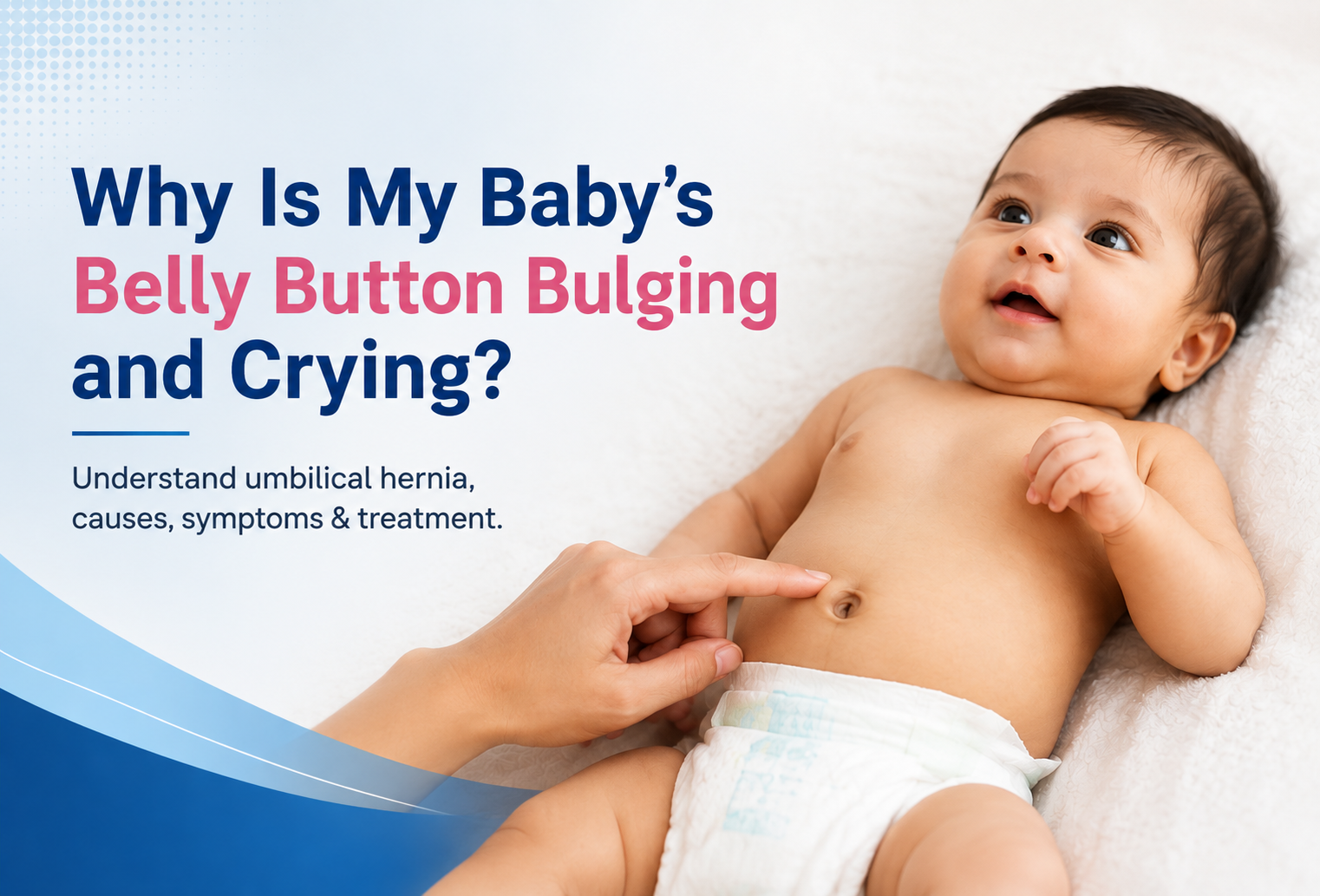
Why Is My Baby’s Belly Button Bulging and Crying? Understanding Umbilical Hernia
Category : Pediatrics
Introduction
A soft bulge around your baby’s navel that grows more visible during crying can be alarming for any parent, but it is often a sign of an umbilical hernia in babies, one of the most common and treatable conditions in infancy. This baby belly button bulging pattern happens because of a small gap in the abdominal muscles that has not fully closed since birth. At Ashwin Hospital, our pediatric care team frequently reassures parents that most of these hernias resolve naturally without any lasting concern. Understanding the causes, symptoms, and treatment path can help you respond with confidence rather than panic.
What Causes an Umbilical Hernia in Babies?
The umbilical hernia causes trace back to the opening in the abdominal wall that the umbilical cord passes through before birth. This opening usually seals shortly after delivery, but when the muscles do not join completely, a weak spot remains where tissue can push through. It is more frequently seen in premature babies and those with lower birth weight, though it can occur in any healthy infant.
- Incomplete closure of the umbilical ring after birth
- Higher likelihood in premature or low birth weight babies
- Increased abdominal pressure from crying, coughing, or straining
- Generally not linked to anything the mother did during pregnancy
Common Umbilical Hernia Symptoms in Infants
Recognising umbilical hernia symptoms early helps parents distinguish a harmless bulge from something needing urgent attention. The most common sign is a baby belly button hernia that appears soft, protrudes further when the baby cries or strains, and flattens when the baby is calm and lying down. In most infants, the hernia causes no pain at all, according to theNHS, which notes that these bulges are usually painless and common in babies and young children.
- A soft swelling that enlarges during crying, coughing, or bowel movements
- Bulge size ranging from a pea to a couple of centimetres
- Flattening or disappearing when the baby is relaxed
- No redness, warmth, or visible distress in typical cases
Umbilical Hernia in Children: Closure Timeline at a Glance
Age of Child
Typical Status
Action Usually Needed
Birth to 1 year
Hernia may appear or fluctuate in size
Monitor at home
1 to 3 years
Most hernias begin closing on their own
Routine paediatric check-ups
3 to 4 years
Majority have closed naturally
Evaluate if still present
Beyond 4 years
Rarely closes without help
Surgical consultation considered
Umbilical Hernia Treatment for Babies
For most infants, umbilical hernia treatment simply means watching and waiting, since the majority of cases close on their own within the first few years of life. When a hernia persists beyond age three or four, or grows unusually large, doctors may recommend umbilical hernia surgery for babies as a straightforward outpatient procedure. According toMedlinePlus, surgery is typically needed only if the hernia has not healed by age three or four, or if the tissue becomes trapped and loses blood supply. At Ashwin Hospital, evaluation is offered to confirm whether monitoring or intervention is the right next step for your child.
- Regular monitoring during routine paediatric visits
- Avoiding home remedies like taping or strapping the area
- Seeking care promptly if the bulge becomes hard, painful, or discoloured
- Surgical repair considered only when the hernia persists or complications arise
Conclusion
An umbilical hernia in babies is rarely a cause for alarm, and most bulges resolve naturally as your child grows. Still, keeping an eye on changes in size, colour, or your baby’s comfort matters for peace of mind. If you have noticed a baby belly button bulging and want a professional opinion, schedule a consultation with Ashwin Hospital to have your baby’s condition properly assessed and monitored.
Frequently Asked Questions
- Is an umbilical hernia in babies dangerous?
A hernia that becomes firm or sensitive should be evaluated very away, but most cases are painless and go away on their own.
- When does an umbilical hernia typically close in a baby?
Without assistance, the majority resolve by the age of three or four, and many close by the age of two.
- What early signs of an umbilical hernia should parents be aware of?
The most typical early indication is a soft bulge near the navel that flattens when the baby is calm and increases with crying or straining.
- Does crying cause or worsen umbilical hernia in infants?
While crying does not cause a hernia, it might increase the visibility of an existing bulge by raising abdominal pressure.
- When is surgery for a baby’s umbilical hernia advised?
Generally speaking, surgery is only taken into consideration if the hernia continues after the age of three or four, expands considerably, or exhibits complications.
By,
Dr. Ashok Kumar S
Consultant Pediatrician, Newborn & ICU Specialist
Ashwin Hospital
Introduction
A soft bulge around your baby’s navel that grows more visible during crying can be alarming for any parent, but it is often a sign of an umbilical hernia in babies, one of the most common and treatable conditions in infancy. This baby belly button bulging pattern happens because of a small gap in the abdominal muscles that has not fully closed since birth. At Ashwin Hospital, our pediatric care team frequently reassures parents that most of these hernias resolve naturally without any lasting concern. Understanding the causes, symptoms, and treatment path can help you respond with confidence rather than panic.
What Causes an Umbilical Hernia in Babies?
The umbilical hernia causes trace back to the opening in the abdominal wall that the umbilical cord passes through before birth. This opening usually seals shortly after delivery, but when the muscles do not join completely, a weak spot remains where tissue can push through. It is more frequently seen in premature babies and those with lower birth weight, though it can occur in any healthy infant.
- Incomplete closure of the umbilical ring after birth
- Higher likelihood in premature or low birth weight babies
- Increased abdominal pressure from crying, coughing, or straining
- Generally not linked to anything the mother did during pregnancy
Common Umbilical Hernia Symptoms in Infants
Recognising umbilical hernia symptoms early helps parents distinguish a harmless bulge from something needing urgent attention. The most common sign is a baby belly button hernia that appears soft, protrudes further when the baby cries or strains, and flattens when the baby is calm and lying down. In most infants, the hernia causes no pain at all, according to theNHS, which notes that these bulges are usually painless and common in babies and young children.
- A soft swelling that enlarges during crying, coughing, or bowel movements
- Bulge size ranging from a pea to a couple of centimetres
- Flattening or disappearing when the baby is relaxed
- No redness, warmth, or visible distress in typical cases
Umbilical Hernia in Children: Closure Timeline at a Glance
| Age of Child | Typical Status | Action Usually Needed |
| Birth to 1 year | Hernia may appear or fluctuate in size | Monitor at home |
| 1 to 3 years | Most hernias begin closing on their own | Routine paediatric check-ups |
| 3 to 4 years | Majority have closed naturally | Evaluate if still present |
| Beyond 4 years | Rarely closes without help | Surgical consultation considered |
Umbilical Hernia Treatment for Babies
For most infants, umbilical hernia treatment simply means watching and waiting, since the majority of cases close on their own within the first few years of life. When a hernia persists beyond age three or four, or grows unusually large, doctors may recommend umbilical hernia surgery for babies as a straightforward outpatient procedure. According toMedlinePlus, surgery is typically needed only if the hernia has not healed by age three or four, or if the tissue becomes trapped and loses blood supply. At Ashwin Hospital, evaluation is offered to confirm whether monitoring or intervention is the right next step for your child.
- Regular monitoring during routine paediatric visits
- Avoiding home remedies like taping or strapping the area
- Seeking care promptly if the bulge becomes hard, painful, or discoloured
- Surgical repair considered only when the hernia persists or complications arise
Conclusion
An umbilical hernia in babies is rarely a cause for alarm, and most bulges resolve naturally as your child grows. Still, keeping an eye on changes in size, colour, or your baby’s comfort matters for peace of mind. If you have noticed a baby belly button bulging and want a professional opinion, schedule a consultation with Ashwin Hospital to have your baby’s condition properly assessed and monitored.
Frequently Asked Questions
- Is an umbilical hernia in babies dangerous?
A hernia that becomes firm or sensitive should be evaluated very away, but most cases are painless and go away on their own. - When does an umbilical hernia typically close in a baby?
Without assistance, the majority resolve by the age of three or four, and many close by the age of two. - What early signs of an umbilical hernia should parents be aware of?
The most typical early indication is a soft bulge near the navel that flattens when the baby is calm and increases with crying or straining. - Does crying cause or worsen umbilical hernia in infants?
While crying does not cause a hernia, it might increase the visibility of an existing bulge by raising abdominal pressure. - When is surgery for a baby’s umbilical hernia advised?
Generally speaking, surgery is only taken into consideration if the hernia continues after the age of three or four, expands considerably, or exhibits complications.
By,
Dr. Ashok Kumar S
Consultant Pediatrician, Newborn & ICU Specialist
Ashwin Hospital