BLOGS
When Is Breathing Difficulty a Medical Emergency?
Category : Pulmonology
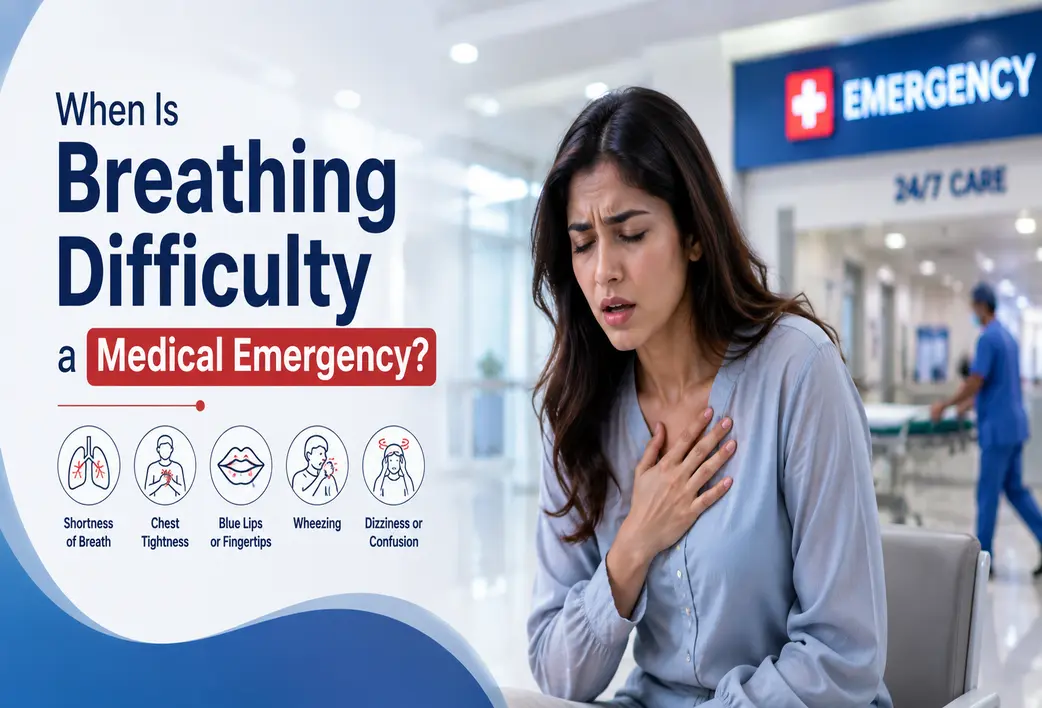
Feeling breathless after strenuous activity is usually normal, but difficulty breathing that occurs suddenly, becomes severe, or happens at rest should never be ignored. Recognizing the difference between temporary breathlessness and a breathing difficulty emergency can help you seek timely medical care and prevent serious complications. Knowing the common difficulty breathing causes, understanding breathing problem warning signs, and getting the right shortness of breath treatment are essential for protecting your health.
What Causes Breathing Difficulty?
Breathing problems can develop for many reasons, ranging from mild allergies to serious heart or lung conditions. Some causes improve with simple treatment, while others require immediate medical attention. Identifying the underlying cause is the first step toward receiving appropriate care.
Common difficulty breathing causes include:
- Asthma
- Reactions to allergies
- Symptoms of pneumonia and other lung infections
- COPD, or chronic obstructive pulmonary disease
- Heart-related disorders
- Panic attacks or anxiety
- obstruction of the airway
- Embolism of the lungs
When Does Breathing Difficulty Become an Emergency?
Not every episode of breathlessness is life-threatening, but certain symptoms should be treated as a medical emergency. Delaying treatment can reduce oxygen supply to vital organs and increase the risk of serious complications. A prompt medical assessment can make all the difference.
Seek emergency assistance in case of:
- Sudden and severe shortness of breath
- Chronic chest tightness symptoms
- Blue lips and fingertips
- Trouble talking because of difficulty breathing
- Severe wheezing and shortness of breath
- Confusion or loss of consciousness
- Rapid worsening of breathing
- Chest pain along with breathing difficulty
Common Symptoms: Emergency or Not?
Some breathing problems require immediate medical care, while others can be evaluated by a doctor without visiting the emergency department. Understanding the difference helps you act quickly when necessary.
Symptom
Needs Emergency Care?
Mild breathlessness after exercise recovering with rest
Usually No
Breathlessness during rest
Yes
Severe chest tightness symptoms
Yes
Mild seasonal allergy symptoms
Usually No
Blue lips or fingertips
Yes
Persistent wheezing and shortness of breath
Yes
High fever with breathing difficulty
Yes
Warning Signs You Should Never Ignore
Breathing difficulty is often the body’s way of signaling that something isn’t right. Even if symptoms improve temporarily, recurring or worsening breathlessness deserves medical evaluation. Paying attention to emergency respiratory symptoms can help prevent serious complications.
Important breathing problem warning signs include:
- Breathing more quickly than usual
- Breathing loudly
- Fever and a persistent cough
- extreme exhaustion when breathing
- Breathlessness making it difficult to lie flat
- Persistent lightheadedness
- Coughing up blood
- Swelling in the legs along with breathlessness
The National Heart, Lung, and Blood Institute explains how recognizing symptoms of lung conditions early can improve treatment outcomes.
What Happens at the Hospital?
If you’re experiencing a breathing difficulty emergency, doctors will first assess your oxygen levels and identify the underlying cause. Early evaluation and quick treatment are essential to stabilize your condition, relieve symptoms, and reduce the risk of serious complications. Prompt assessment allows the medical team to begin appropriate treatment immediately while preventing the condition from worsening.
Your evaluation may include:
- Oxygen level monitoring
- Physical examination
- Chest X-ray
- Blood tests
- ECG (if heart-related causes are suspected)
- Nebulization when needed
- Additional imaging or investigations
At Ashwin Hospital, emergency physicians and respiratory specialists provide prompt assessment and appropriate shortness of breath treatment using advanced diagnostic and emergency care facilities.
Seek immediate medical attention if breathing difficulty develops suddenly or is accompanied by chest pain or bluish lips. Learn more about emergency health services through the National Health Mission.
How Can Breathing Emergencies Be Prevented?
Although all breathing emergencies cannot be prevented, taking care of any health problems, and getting timely treatment for respiratory problems will help lower the risk.
Methods of lowering your risk:
- Not smoking
- Control your asthma or COPD as directed by your doctor
- Getting all recommended vaccines
- Taking early treatment for respiratory infections
- Maintaining a healthy weight
- Exercising regularly
- Getting regular checkups
Why Choose Ashwin Hospital?
Breathing emergencies demand urgent response, correct diagnosis, and prompt intervention. Ashwin Hospital offers emergency department services for assessing and treating various breathing emergencies from asthma to other breathing problems.
Equipped with skilled doctors, advanced diagnostic technology, and emergency department services available 24/7, Ashwin Hospital will give you urgent respiratory emergency care.
Conclusion
Breathing issues must never be overlooked especially if sudden and severe. Knowing what breathing problem is an emergency, being aware of causes of difficult breathing and having a prompt shortness of breath treatment can save lives.
In case of severe breathing troubles, symptoms of difficulty breathing or other respiratory emergency care, visit Ashwin Hospital for evaluation and treatment.
FAQs
- How do we define a breathing difficulty emergency?
Breathing difficulty emergency is characterized by acute severe breathlessness, chest pain, blue lips, confusion, or difficulty speaking due to lack of air.
- Which factors cause difficulty in breathing?
Common difficulty breathing causes are asthma, pneumonia, COPD, allergies, heart diseases, pulmonary embolism, and anxiety disorder.
- How do I identify warning signs of difficulty breathing?
Warning signs of difficulty breathing are constant chest pain, difficult wheezing, blue lips, spitting of blood, dizziness, and difficult breathing while resting.
- What will be the first treatment option for an emergency breathing problem?
The treatment for breathing difficulties depends on the cause of the condition, but it could include oxygen therapy, nebulizer treatments, medications, and others.
- When should I consult a doctor for my breathing difficulties?
You should visit the doctor in case you have breathing difficulties at rest, recurrent symptoms, chest pain, fever with difficulty breathing, among others.
By,
Dr. Vani,
MBBS, DTCD,
Pulmonology.
Feeling breathless after strenuous activity is usually normal, but difficulty breathing that occurs suddenly, becomes severe, or happens at rest should never be ignored. Recognizing the difference between temporary breathlessness and a breathing difficulty emergency can help you seek timely medical care and prevent serious complications. Knowing the common difficulty breathing causes, understanding breathing problem warning signs, and getting the right shortness of breath treatment are essential for protecting your health.
What Causes Breathing Difficulty?
Breathing problems can develop for many reasons, ranging from mild allergies to serious heart or lung conditions. Some causes improve with simple treatment, while others require immediate medical attention. Identifying the underlying cause is the first step toward receiving appropriate care.
Common difficulty breathing causes include:
- Asthma
- Reactions to allergies
- Symptoms of pneumonia and other lung infections
- COPD, or chronic obstructive pulmonary disease
- Heart-related disorders
- Panic attacks or anxiety
- obstruction of the airway
- Embolism of the lungs
When Does Breathing Difficulty Become an Emergency?
Not every episode of breathlessness is life-threatening, but certain symptoms should be treated as a medical emergency. Delaying treatment can reduce oxygen supply to vital organs and increase the risk of serious complications. A prompt medical assessment can make all the difference.
Seek emergency assistance in case of:
- Sudden and severe shortness of breath
- Chronic chest tightness symptoms
- Blue lips and fingertips
- Trouble talking because of difficulty breathing
- Severe wheezing and shortness of breath
- Confusion or loss of consciousness
- Rapid worsening of breathing
- Chest pain along with breathing difficulty
Common Symptoms: Emergency or Not?
Some breathing problems require immediate medical care, while others can be evaluated by a doctor without visiting the emergency department. Understanding the difference helps you act quickly when necessary.
| Symptom | Needs Emergency Care? |
| Mild breathlessness after exercise recovering with rest | Usually No |
| Breathlessness during rest | Yes |
| Severe chest tightness symptoms | Yes |
| Mild seasonal allergy symptoms | Usually No |
| Blue lips or fingertips | Yes |
| Persistent wheezing and shortness of breath | Yes |
| High fever with breathing difficulty | Yes |
Warning Signs You Should Never Ignore
Breathing difficulty is often the body’s way of signaling that something isn’t right. Even if symptoms improve temporarily, recurring or worsening breathlessness deserves medical evaluation. Paying attention to emergency respiratory symptoms can help prevent serious complications.
Important breathing problem warning signs include:
- Breathing more quickly than usual
- Breathing loudly
- Fever and a persistent cough
- extreme exhaustion when breathing
- Breathlessness making it difficult to lie flat
- Persistent lightheadedness
- Coughing up blood
- Swelling in the legs along with breathlessness
The National Heart, Lung, and Blood Institute explains how recognizing symptoms of lung conditions early can improve treatment outcomes.
What Happens at the Hospital?
If you’re experiencing a breathing difficulty emergency, doctors will first assess your oxygen levels and identify the underlying cause. Early evaluation and quick treatment are essential to stabilize your condition, relieve symptoms, and reduce the risk of serious complications. Prompt assessment allows the medical team to begin appropriate treatment immediately while preventing the condition from worsening.
Your evaluation may include:
- Oxygen level monitoring
- Physical examination
- Chest X-ray
- Blood tests
- ECG (if heart-related causes are suspected)
- Nebulization when needed
- Additional imaging or investigations
At Ashwin Hospital, emergency physicians and respiratory specialists provide prompt assessment and appropriate shortness of breath treatment using advanced diagnostic and emergency care facilities.
Seek immediate medical attention if breathing difficulty develops suddenly or is accompanied by chest pain or bluish lips. Learn more about emergency health services through the National Health Mission.
How Can Breathing Emergencies Be Prevented?
Although all breathing emergencies cannot be prevented, taking care of any health problems, and getting timely treatment for respiratory problems will help lower the risk.
Methods of lowering your risk:
- Not smoking
- Control your asthma or COPD as directed by your doctor
- Getting all recommended vaccines
- Taking early treatment for respiratory infections
- Maintaining a healthy weight
- Exercising regularly
- Getting regular checkups
Why Choose Ashwin Hospital?
Breathing emergencies demand urgent response, correct diagnosis, and prompt intervention. Ashwin Hospital offers emergency department services for assessing and treating various breathing emergencies from asthma to other breathing problems.
Equipped with skilled doctors, advanced diagnostic technology, and emergency department services available 24/7, Ashwin Hospital will give you urgent respiratory emergency care.
Conclusion
Breathing issues must never be overlooked especially if sudden and severe. Knowing what breathing problem is an emergency, being aware of causes of difficult breathing and having a prompt shortness of breath treatment can save lives.
In case of severe breathing troubles, symptoms of difficulty breathing or other respiratory emergency care, visit Ashwin Hospital for evaluation and treatment.
FAQs
- How do we define a breathing difficulty emergency?
Breathing difficulty emergency is characterized by acute severe breathlessness, chest pain, blue lips, confusion, or difficulty speaking due to lack of air.
- Which factors cause difficulty in breathing?
Common difficulty breathing causes are asthma, pneumonia, COPD, allergies, heart diseases, pulmonary embolism, and anxiety disorder.
- How do I identify warning signs of difficulty breathing?
Warning signs of difficulty breathing are constant chest pain, difficult wheezing, blue lips, spitting of blood, dizziness, and difficult breathing while resting.
- What will be the first treatment option for an emergency breathing problem?
The treatment for breathing difficulties depends on the cause of the condition, but it could include oxygen therapy, nebulizer treatments, medications, and others.
- When should I consult a doctor for my breathing difficulties?
You should visit the doctor in case you have breathing difficulties at rest, recurrent symptoms, chest pain, fever with difficulty breathing, among others.
By,
Dr. Vani,
MBBS, DTCD,
Pulmonology.